When a powerful earthquake struck Myanmar on 28 March 2025, Wai’s life changed in an instant.
A mother of two young daughters, Wai was feeding her baby when the ground began to shake violently beneath her. Within seconds, buildings collapsed, debris fell, and panic spread through her community.
“I fell over and the entire shop collapsed around me,” she recalls. “I held my baby tightly, but my heart was breaking because my older daughter was not with me. I could hear her crying, but I could not reach her.”
Her older daughter was injured during the chaos and has struggled to walk since. In the days that followed, fear lingered. Wai’s youngest daughter became terrified of even the smallest sounds, waking up throughout the night.
“When I think back to the earthquake, it still feels like a terrible nightmare,” Wai says.
Beyond the immediate trauma, the earthquake brought new and overwhelming challenges.
Wai’s small tailoring business — her family’s main source of income — came to a halt. At the same time, her husband lost his job when a nearby bridge collapsed, cutting off access to work opportunities.
“After that day, everything became more difficult,” Wai explains. “Food and water prices increased, and work opportunities disappeared. We had no income.”
As basic costs rose, the family began to fall into debt, struggling to afford even the essentials.
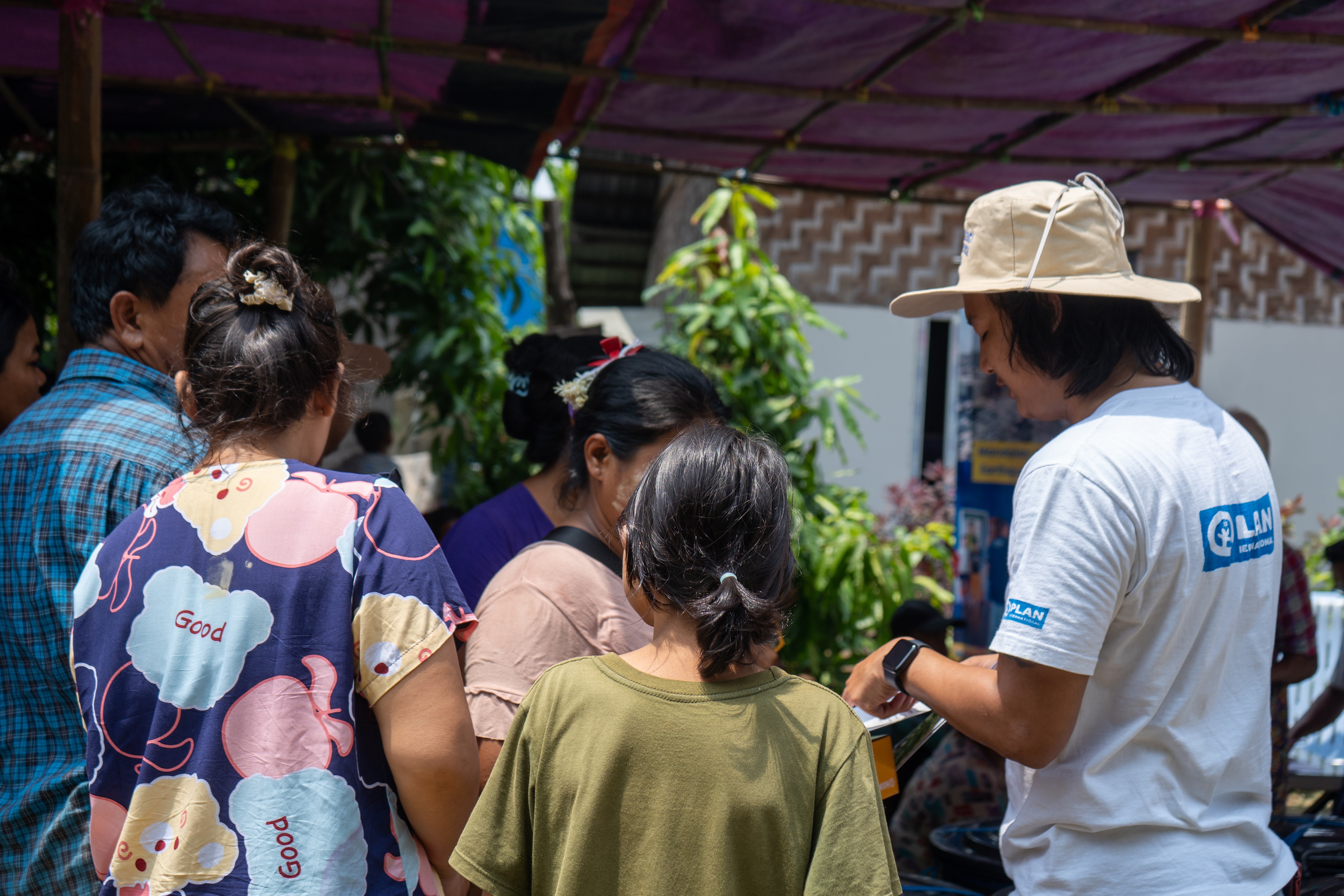
In the midst of uncertainty, support from Plan International began to make a difference.
A child-friendly space was established in Wai’s village — a safe environment where children could play, learn and begin to process their experiences.
Wai’s eldest daughter started attending regularly.
The impact has been profound — not only for her daughter, but for the entire family.
“Seeing them happy gives me peace of mind.”
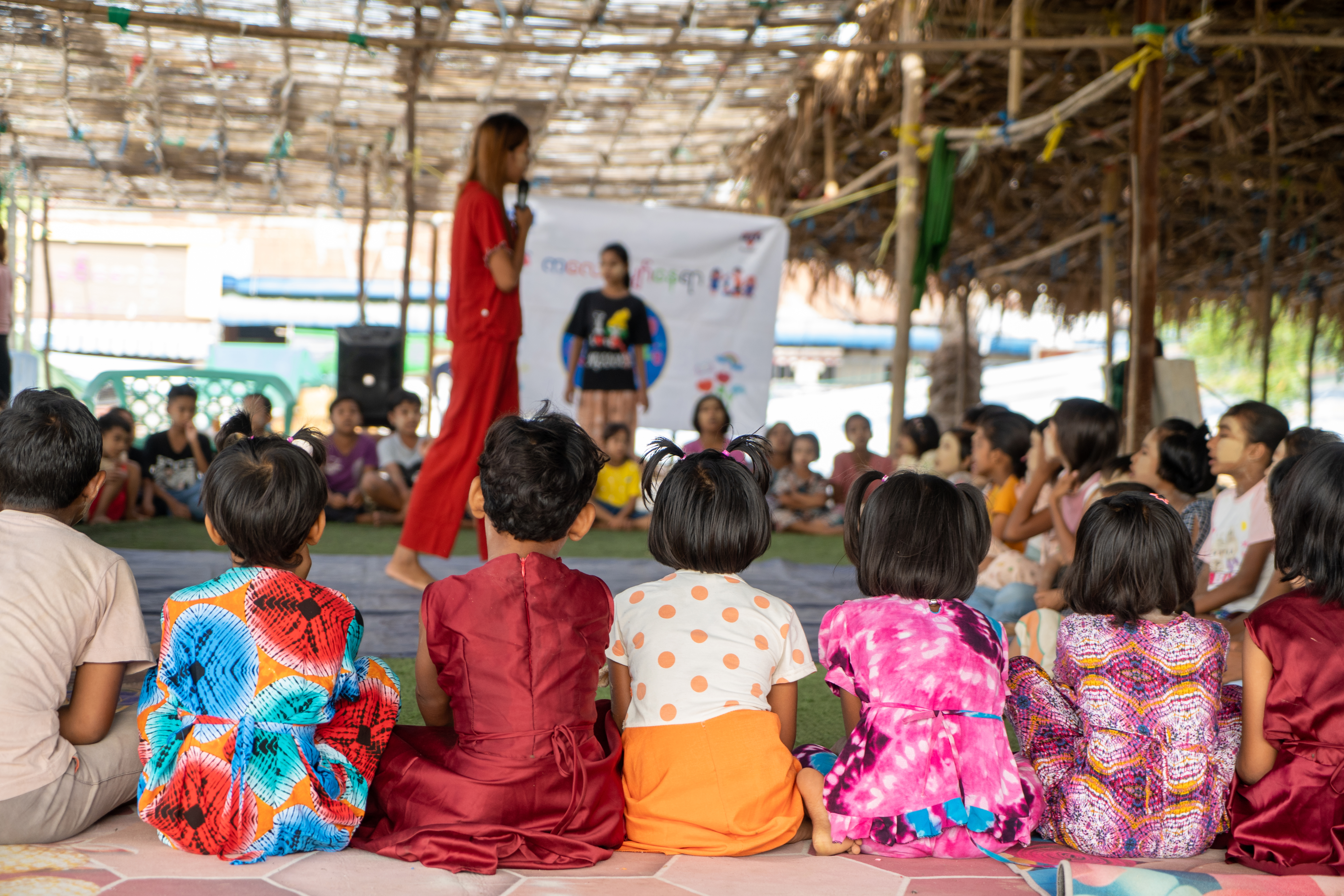
"When she is there, she can play, paint, jump rope and learn poems with the other children. These activities have helped her slowly overcome her fear.”
Wai, speaking about her eldest daughter
Alongside emotional support, Wai’s family received multipurpose cash assistance of 360,000 MMK (approximately $70 USD).
For Wai, this support was transformative.
“When I received it, tears came to my eyes. It was the first time since the devastation that I had felt a sense of security again.”
The cash enabled her to buy food, repay debts, and — crucially — begin rebuilding her tailoring business.
“Without this support, I do not know how we would have survived.”
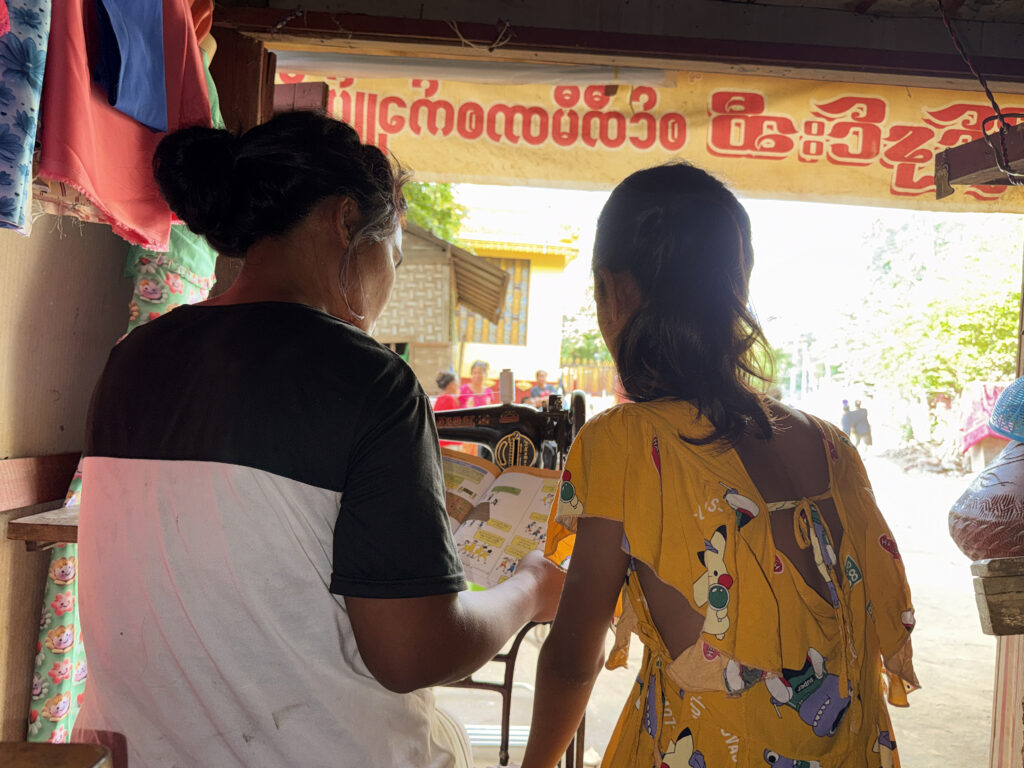
One year on, Wai is slowly rebuilding her life.
Her business is starting again. Her daughters are finding moments of joy. And while the trauma remains, hope is returning.
“We lost possessions, but we are still alive,” she says. “Seeing my daughters laughing and playing together again is the greatest gift for me.”
Wai’s story is one of many.
The 7.7-magnitude earthquake and its aftershocks displaced communities across Myanmar, damaging homes, schools and critical infrastructure. Thousands of people lost their lives, and many more were left struggling to rebuild.
In response, Plan International has supported over 219,000 people, more than half of whom are women and girls.
This work includes:
Through this support, families like Wai’s are not only surviving — they are beginning to recover.
For Wai, the journey is far from over. But each day brings small signs of progress.
Her daughters are smiling again. Her work is returning. And her family is moving forward — step by step.
“I would like to thank everyone who helped us,” she says.