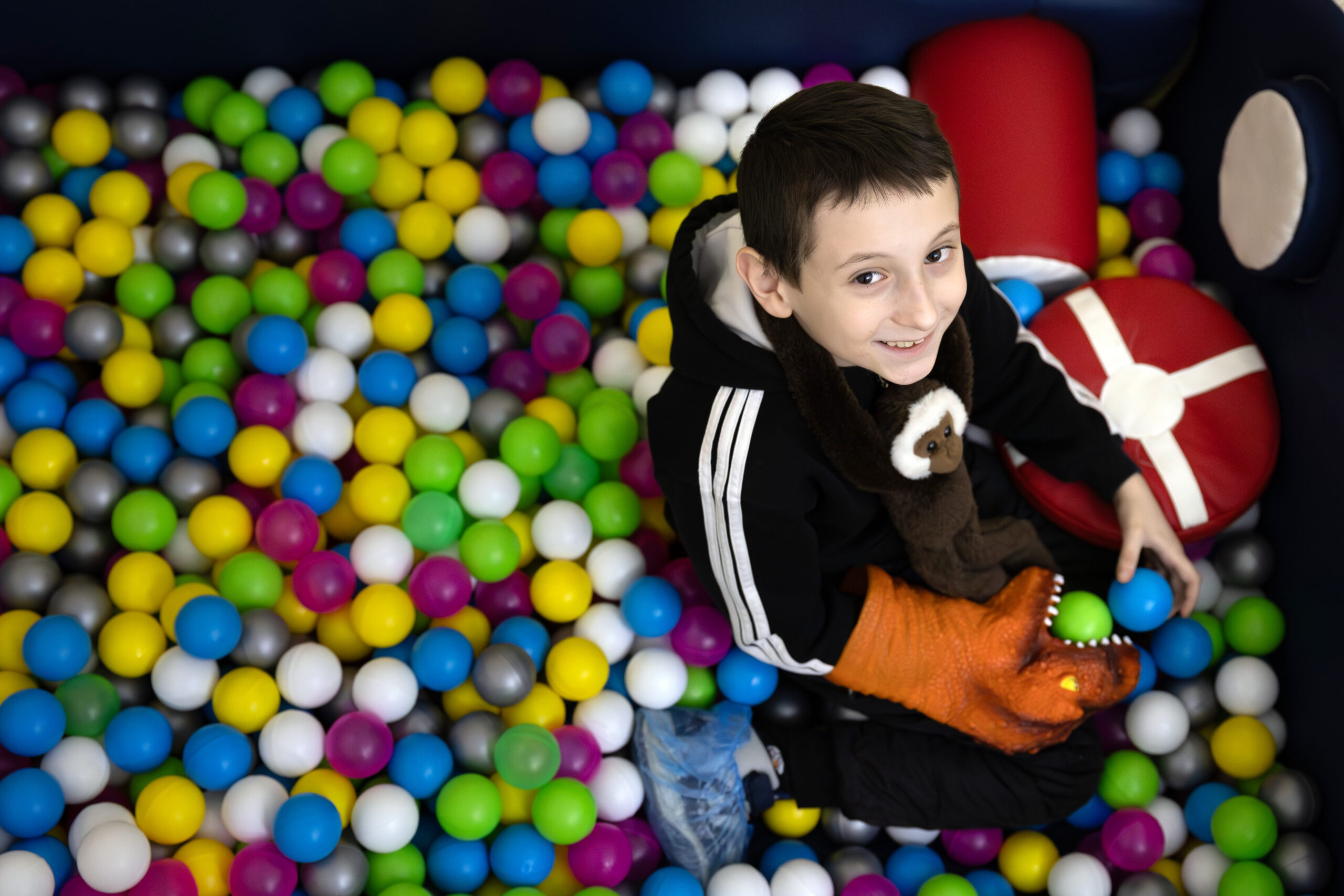
For over half his childhood, 8-year-old Damir has lived with night terrors. Most nights, he wakes up in a jolt of fear, unable to distinguish the walls of his bedroom from the explosions and fires in his nightmares.
“Fear in children is very complicated, but it’s important for young children like Damir to recognise that it is there to protect them,” says Viktoria, a crisis psychologist who works at a child-friendly space Kropyvnytskyi, a city in central Ukraine. “It’s difficult to explain fear and anxiety, so instead, I asked Damir to draw what he feels.”
Weekly art therapy sessions at the centre, which began last year, have helped Damir to unlock his fears and learn how to manage them. As his sleep improved, his anxiety eased, and he soon began to open up to his mother and the other children at the centre.
“I’m really good at Karate and I want to start doing competitions with other kids,” Damir tells us while submerged in a colourful ball pit. Hundreds of vulnerable children and young Ukrainian families have come to rely on the child-friendly space as a haven of support and wellbeing during this difficult time, which is supported by Plan International and our local partner Slavic Heart.
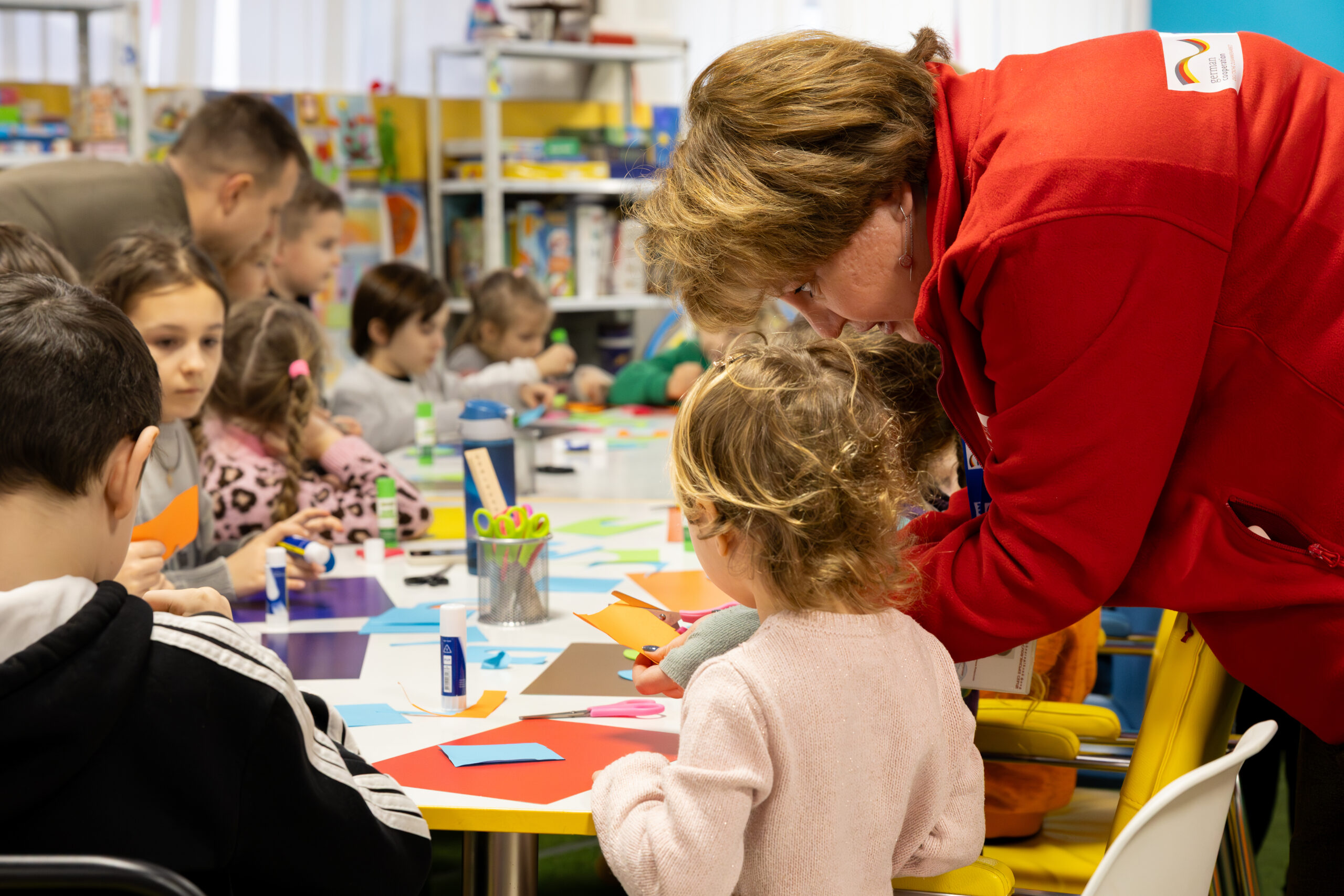
Inside, the rooms buzz with activity. “We have activities for different age groups all day, every day, and we run training courses and therapy sessions for parents, too,” explains Hanna, the project coordinator. “One morning its soft play and board games, then the next its computer skills, followed by dancing and painting. We try to make the programme as diverse as we can.”
Sasha teaches girls and boys about computers and programming, which has proved particularly helpful in regulating emotional instability in children. “Come and look at what they’re making,” he whispers, careful not to disturb the children from the world-building game on their screens, which are connected to a back-up generator.
“They’re constructing their own villages, ones without all the war and terror.”
For foster parents Yuri and Oksana, both in their fifties, who were forced to leave their lakeside home in Donetsk in 2022, the centre provides an environment in which their youngest children can play and be active, which they miss from before the war began.
“What we can offer here is a place of security, safety and support. I only hope, that with continued support, we will be able to bring a sense of comfort and purpose to many more children who are suffering in silence."
Hanna
Having witnessed the trauma experienced by children in Donetsk, Yuri and Oksana decided to provide a safe and stable home for ten children from care facilities across the region, offering them a sense of family life when all hope had nearly been lost.
One of their children, who has learning difficulties, has been attending training sessions and psychosocial support groups at the child-friendly space for several months. “We love to see him happy here,” said Oksana. “I’m so grateful for the support this space offers us every week.”
While arts and crafts keep the younger children active and engaged for hours on end, a large conference room has become a safe haven for teenagers, many of whom have been displaced from occupied territories. Sitting in a circle, the teenagers discuss how the war has affected them. One by one, they plot out their future plans for a Ukraine without war.
“What we can offer here is a place of security, safety and support,” says Hanna, who has managed the child-friendly space, supported by Plan International, since it opened. “I only hope, that with continued support, we will be able to bring a sense of comfort and purpose to many more children who are suffering in silence.”