Across many parts of the world, young people face serious challenges in realising their sexual and reproductive health and rights. We’re working to change that.
The statistics are stark: each year, around 16 million adolescent girls aged 15–19 and 2.5 million girls under 16 give birth. Complications during pregnancy and childbirth remain a leading cause of death among adolescent girls, with access to skilled care and quality health services often out of reach.
Every day, an estimated 33,000 girls are forced into child, early, and forced marriage, and at least 200 million girls and women alive today have undergone Female Genital Mutilation/Cutting (FGM/C) — a harmful practice with severe and lasting physical and mental health consequences. In crisis-affected areas, these challenges become even more urgent as access to services is disrupted and the risk of gender-based violence increases.
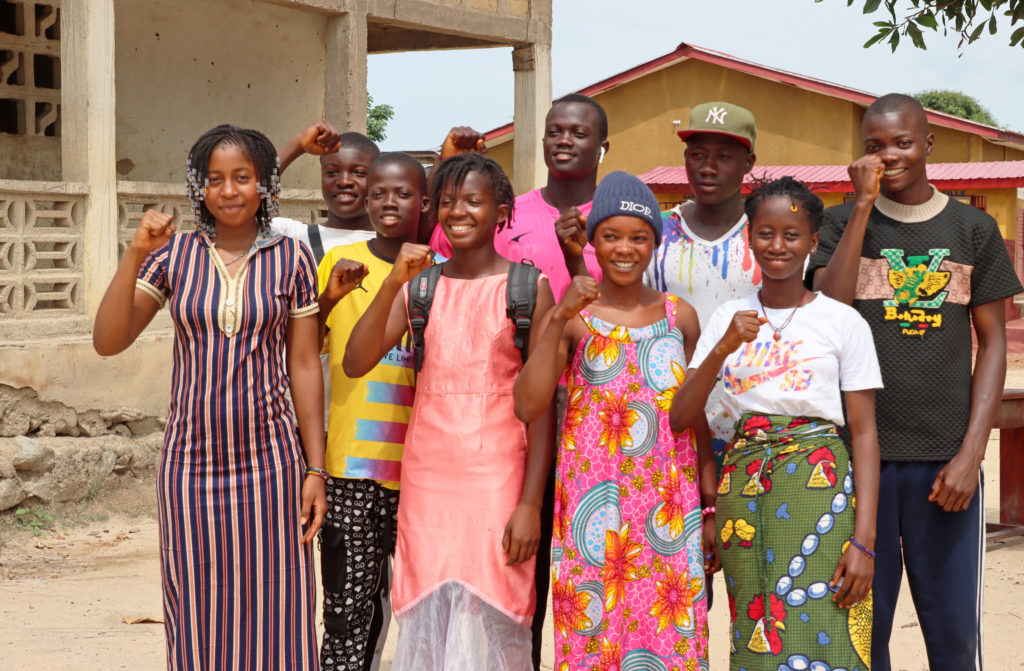
With support from partners like Irish Aid, the European Union, and individual donors, we’re driving an integrated approach to sexual and reproductive health across West and Central Africa.
We connect education, health services, and community action to give young people the support they need:
When humanitarian crises strike, we respond quickly to maintain access to essential sexual and reproductive health support. This includes:
When humanitarian crises strike, we respond quickly to maintain access to essential sexual and reproductive health support. This includes:
We work to ensure that children, adolescents, and young people — in all their diversity — have the knowledge, confidence, and supportive environment they need to make informed decisions about their bodies, relationships, and futures.
Our approach creates opportunities to challenge harmful gender norms, tackle stigma and discrimination, and expand access to essential sexual and reproductive health information and services. We believe that when young people are empowered with the right support, they can shape healthier, safer futures for themselves and their communities.
Real change happens when communities are engaged. We work alongside civil society organisations, government authorities, and local leaders to shift attitudes and practices that affect girls and boys.
Together, we promote positive role models, address harmful practices like FGM/C and child marriage, and ensure young people’s voices are heard in the decisions that affect their lives.